Mirror Number vs Palindrome Number — What's the Difference?
Mirror Number
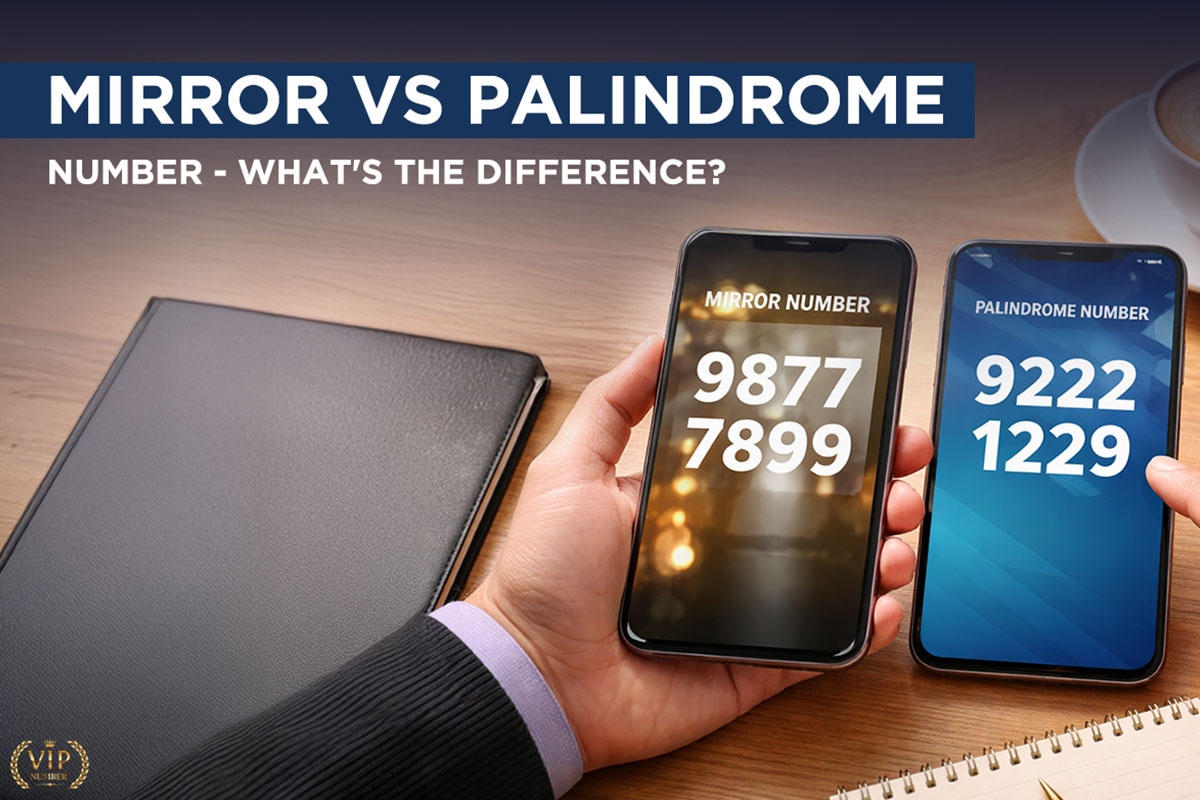
A mirror number is a number that looks the same when reflected (like in a mirror), usually digit-wise symmetry.
It depends on whether digits themselves are mirrorable.
Common mirror digits: 0, 1, 8 (perfect mirrors), sometimes 2 ↔ 5, 6 ↔ 9 (depending on definition).
Examples:
101 → mirror image is still 101
808 → same in mirror
69 → becomes 96 in mirror (not same, but still a mirror pair)
So, a mirror number is about visual reflection symmetry, not just reversing digits.
Palindrome Number
A palindrome number reads the same forward and backward.
No need to worry about mirror shape—just reverse the digits.
Examples:
121 → same forward & backward ?
1331 → palindrome ?
123 → not a palindrome ?
So, a palindrome is purely about digit order reversal.
Important Insight
A number can be:
- Palindrome but NOT Mirror
Example: 12321 (2 and 3 are not mirror-friendly)
- Mirror but NOT Palindrome
Rare, but possible depending on interpretation
- Both Mirror and Palindrome
Example: 101, 808, 181
Real-Life Applications
These number patterns are not just for fun—they are used in:
- Mathematics puzzles
- Cryptography concepts
- Logical reasoning tests
- Numerology (very relevant for VIP numbers & pattern-based numbers)
Why It Matters (Especially for VIP Numbers)
If you are into VIP mobile numbers or numerology, these patterns increase the value and attractiveness of numbers.
Palindrome numbers → easy to remember
Mirror numbers → visually appealing and rare
Example: Numbers like 8080808080 or 1001 patterns are highly in demand.
Conclusion
While both mirror and palindrome numbers may look similar, the core difference lies in logic:
Palindrome = Same when reversed
Mirror = Same when reflected
Understanding this difference helps in mathematics, puzzles, and even in choosing premium number patterns.